Custom and Engraved Ribbon Cutting Scissors: Options and Limits
- Author: Ceremonial Scissors Guide Editorial Team
- Published on
- Category: Sets
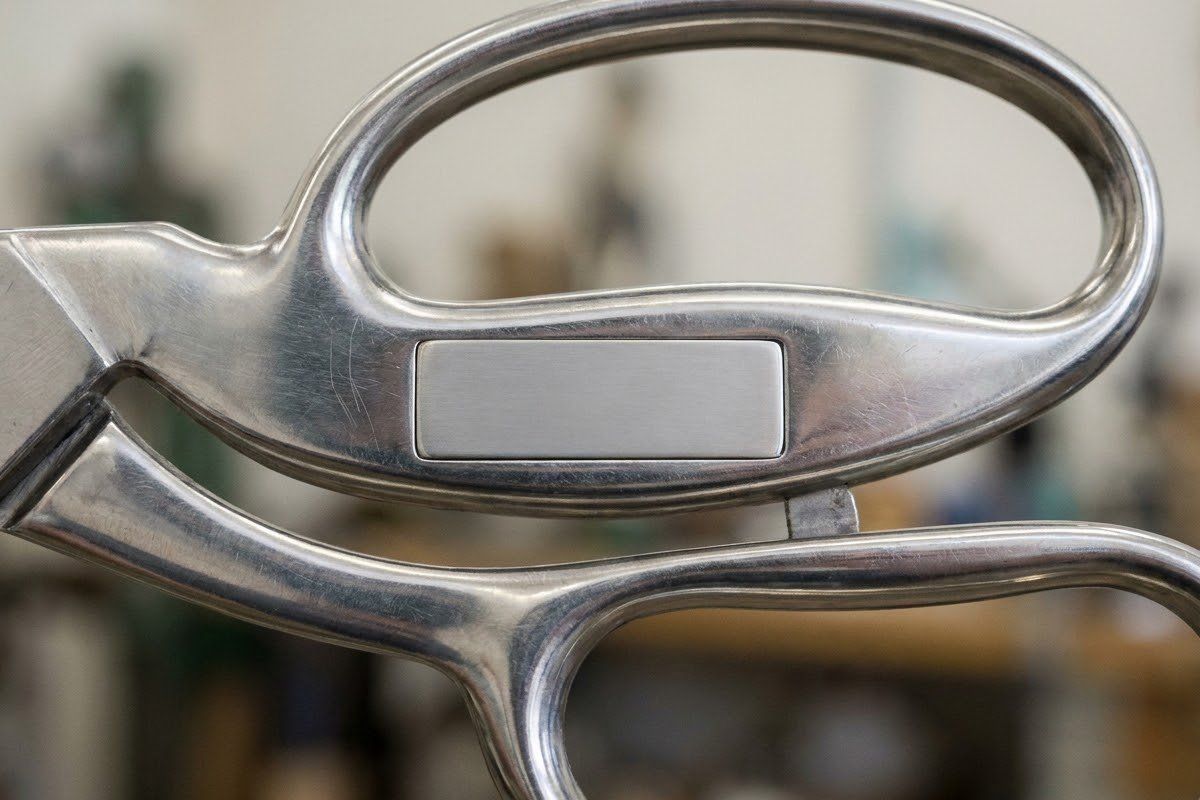
Ribbon cutting scissors can usually be personalised by engraving or etching the blade or handle, or by adding a plate or engraved case, with a name, date and place. Limits depend on the maker, the metal and the finish. Ask what can be engraved, how it is proofed and how long it takes, and always approve spelling in writing.
Part of our guide: Ribbon and Scissors for a Ribbon Cutting: What a Complete Set Includes
Engraving turns ceremonial scissors into a keepsake, but it has limits. This page covers what can be personalised and what to ask a maker. It is part of the ribbon and scissors guide and uses general information only; follow the maker’s instructions for your own pair.
What can be personalised
- Blade, if the maker engraves or etches metal.
- Handle, where space allows.
- Plate, attached to the scissors, case or stand.
- Case, often a lid plate or a lining.
Engraving, etching and plates
Engraving cuts into the surface, etching uses a chemical or laser process to mark it, and a plate is a separate piece fixed on. Plated or painted scissors can behave differently from solid metal, so ask whether engraving will go through a plated layer and how the maker finishes it. Materials are covered in what ceremonial scissors are made of.
What to put on it, and what to leave off
Put the name, place and date. Keep it short. Leave off long text and details that may change. If the keepsake will be handed over, confirm the recipient’s name and title in writing before engraving.
Lead time questions for any maker
- How long from approval to finished product?
- Is a proof shown before engraving?
- What is the process for corrections?
- Where on the scissors will the work go?
- How are the scissors packed for shipping or collection?
Proofing and spelling
Read the proof aloud, check each name and date against a written source, and have a second person check it. Approve in writing. A mistake in metal is not easy to fix.
Keepsake display after the event
Store or display the scissors in a case or on a stand; see caring for ceremonial scissors. If you are choosing scissors for a business opening, see grand opening scissors, and the overview of sizes and types covers sizes.
Planning the wording
Decide who the engraving is for before you decide what it says. A keepsake for the business owner needs a different line from a presentation piece for a guest. Draft two or three versions, read each one aloud and ask someone outside the project to read it cold. If a version needs a long explanation to make sense, it is too long for a plate.
A short engraving checklist
- Write the exact text, including capital letters and punctuation, in one document.
- Check every name, title and place against an official written source, not memory.
- Ask where on the scissors, case or stand the text will go and what size it will be.
- Ask for a proof or a mock-up, and read it slowly.
- Approve the final version in writing, with the date you approved it.
- Ask how long the work takes and how the finished item is checked before it ships.
Common mistakes
- Engraving a date or title that may change before the event.
- Putting text on the blade of a pair that is meant to cut.
- Using decorative script that is hard to read at a distance.
- Skipping the proof because the order is urgent.
- Forgetting to ask what happens if the maker makes the error.
Questions to ask a pro
Does engraving weaken or mark the surface of this particular pair? Is the plate fixed in a way that does not trap moisture? Can the work be done again if the finish wears? A clear written answer to each tells you whether the maker has done this kind of work before.
People also ask
Can ribbon cutting scissors be engraved?
Often yes. Makers commonly offer engraving or etching on the blade or handle, or a plate attached to the scissors or case. What is possible depends on the metal, the finish and the equipment, so ask the maker what can be engraved, in what area, and whether the finish is applied before or after the work.
What should you engrave on ceremonial scissors?
Keep it short: the organization or place, the occasion and the date. Short text stays legible on a curved handle and survives wear. Leave off long slogans, small print and anything likely to be out of date. Check every name and date against a written source before approving the proof.
How long does engraving take?
It varies by maker and by how busy they are, so we do not quote a figure. Ask for a lead time in writing, including proofing and any shipping, and work back from the event date. Allow a margin for proof corrections, because a second round of changes is common.
Does engraving affect cutting?
Light engraving on a handle or plate should not affect cutting. Engraving on or near the cutting edge of a blade could, so ask the maker where the engraving goes and keep it away from the edge. If the scissors are meant to cut, test them with the ribbon after any work is done.
Can I add a plate instead of engraving?
Yes. A plate on the handle, case or a display stand is a common alternative and can be replaced later, which suits scissors used for more than one event. Ask how the plate is attached and whether the fixing could loosen or catch on the ribbon.
Further reading
- TSA: Scissors (tsa.gov)
- USPS Postal Explorer, DMM 101: Commercial Mail Eligibility (size and weight) (pe.usps.com)
- eCFR: 16 CFR 1500.48 (ecfr.gov)
Worth reading next
- Ribbon and Scissors for a Ribbon Cutting: What a Complete Set Includes
What a complete ribbon and scissors set for a ribbon cutting includes: scissors, ribbon, bow, case and extras, with a checklist of items to gather.